The Six Art Elements are the building blocks of the visual arts. Artists, designers, architects and artisans utilize some or all of these elements in the creation of their works. The Art Principles are the plan or scheme by which the art elements are combined and arranged. An artwork can consist of one or more of the elements in infinite combinations and variations. When you can identify the elements and evaluate their role in the composition of an artwork, you are better able to understand the artist's choices. You can then better evaluate whether a work of art is successful, and why. *Text addapted from: http://www.getty.edu/education/for_ teachers/building_lessons/elements.html |
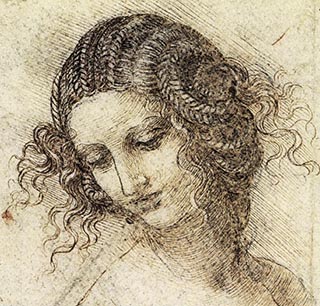 Leonardo Davinci, Study for the Head of Ledo 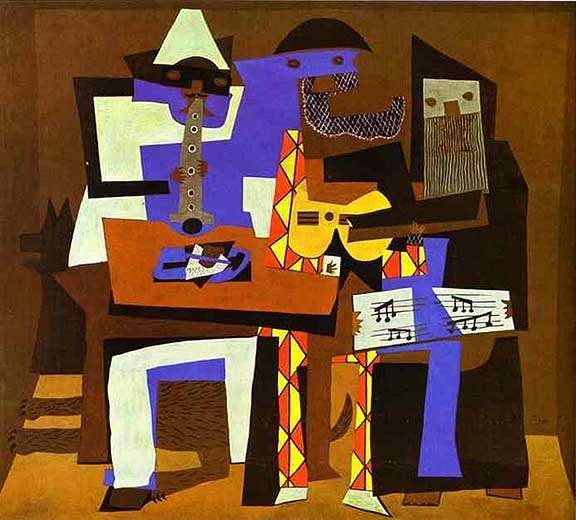 Pablo Picasso, Three Musicians, 1921 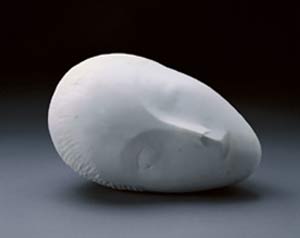 Constantine Brancusi, Sleeping Muse, 1909-1911
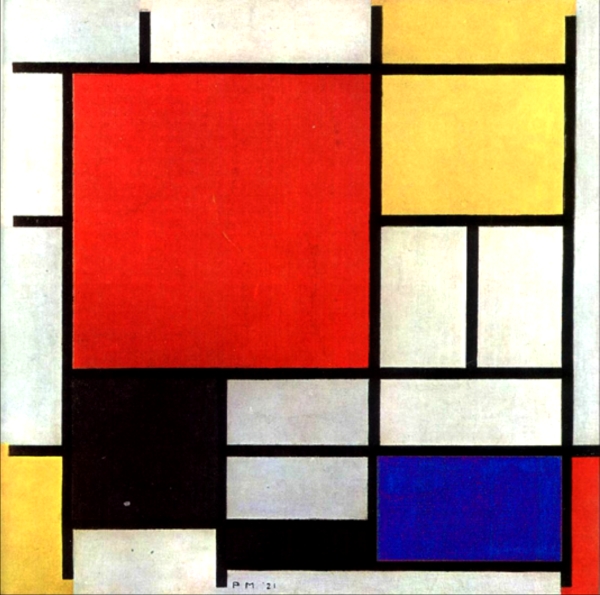 Piet Mondrian, Composition in Red, Yellow, Blue and Black 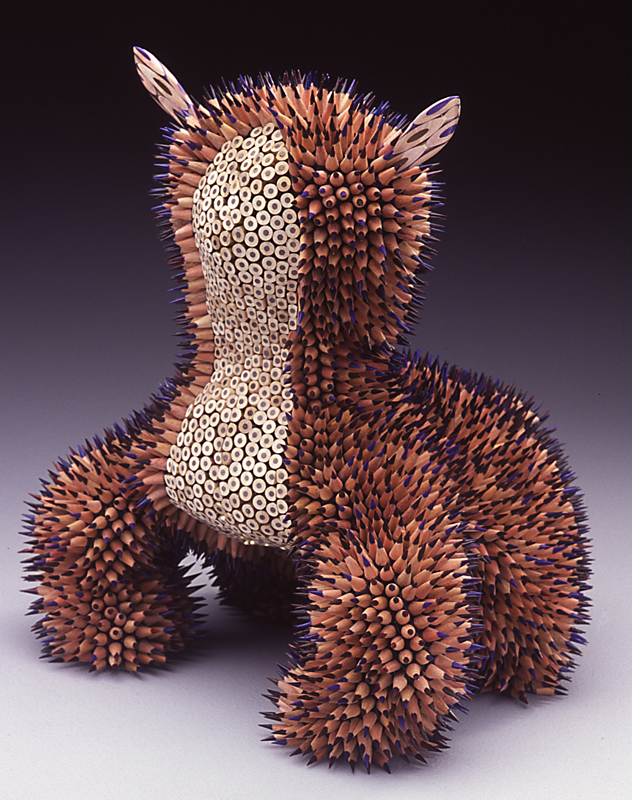 Jennifer Maestre, Pencil sculpture 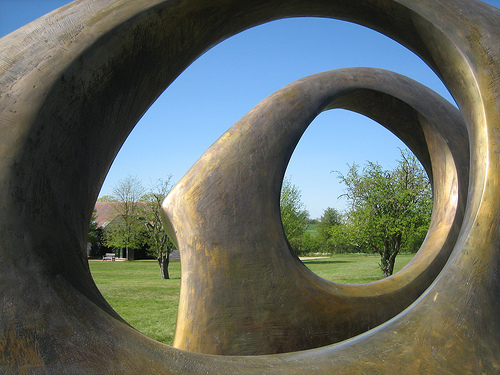 Henry Moore, Double Oval, 1966
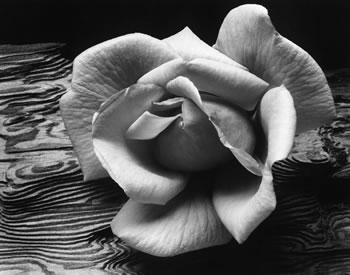 Ansel Adams, Rose and Driftwood, 1920 |
1. Line Is a continuous mark made on some surface by a moving point. It may be two dimensional, like a pencil mark on a paper or it may be three dimensional (wire) or implied ( the edge of a shape or form) often it is an outline, contour or silhouette.
A shape is a closed two dimensional space. It has only height and width. Shape is usually defined by a line, which can provide its outline. It is also defined by the shapes and elements around it. Form has depth as well as width and height. Three-dimensional forms are the basis of sculpture, furniture, decorative arts, and architecture. Three-dimensional forms can be seen from more than one side. Form can also be implied in drawing, painting or photography as the artist creates the illusion of a three dimensional object or space.
3. Color Refers to all the various colors used in an artwork. It has three properties: Hue, intensity and shade/tint. Black, White and Browns are called Neutral colors. All colors but white can be mixed using the three Primary colors - Red, Yellow and Blue.
4. Texture Texture is the physical feel or appearance of a surface. It can be implied, like the drawing of fur of an animal, or tactile, the actual fur used in the artwork. Artists use color, line, pattern and shading to imply textures. Tactile texture is found in the materials used to create the surfaces of an artwork - in painting, sculpture or collage.
5. Space Refers to distances or areas around, between or within components of an artwork. Space can be positive (the actual object) or negative (the area around or within the object). Space can be open or closed, shallow or deep and two-dimensional or three-dimensional. |
